How Does the Disabled Facilities Grant Work for Stairlifts and Lifting Equipment?
Matthew_Cargo
16 October 2026
A Disabled Facilities Grant (DFG) is a mandatory grant provided by local councils in England, Wales and Northern Ireland to help disabled people pay for essential home adaptations so they can live safely and independently in their home.
A local authority grant, the DFG is available for both adults and children, with grants for adults usually awarded after a means test based on household income and savings.
The grant can be used for major structural or access adaptations to a home, including widening doors and installing ramps or grab rails, installing a stairlift, replacing a bath with a level-access shower or wet room, or improving access to the garden.
At NHC Procurement, we provide procurement support for public sector organisations through our Stairlifts and Lifting Equipment framework, working with our trusted suppliers to ensure those living with disabilities in social housing or care receive the help they need to live independently.
What a Disabled Facilities Grant (DFG) can be used for
A Disabled Facilities Grant can be used to pay for a range of essential home adaptations that can help a disabled person live more independently and safely in their home. Disabled individuals living in social housing – including council and housing association tenants – are eligible to apply for a DFG.
The grant can be used to support someone with getting around inside the home, supporting access in and out of the home, and update bathrooms, kitchens and living areas.
Stairlifts
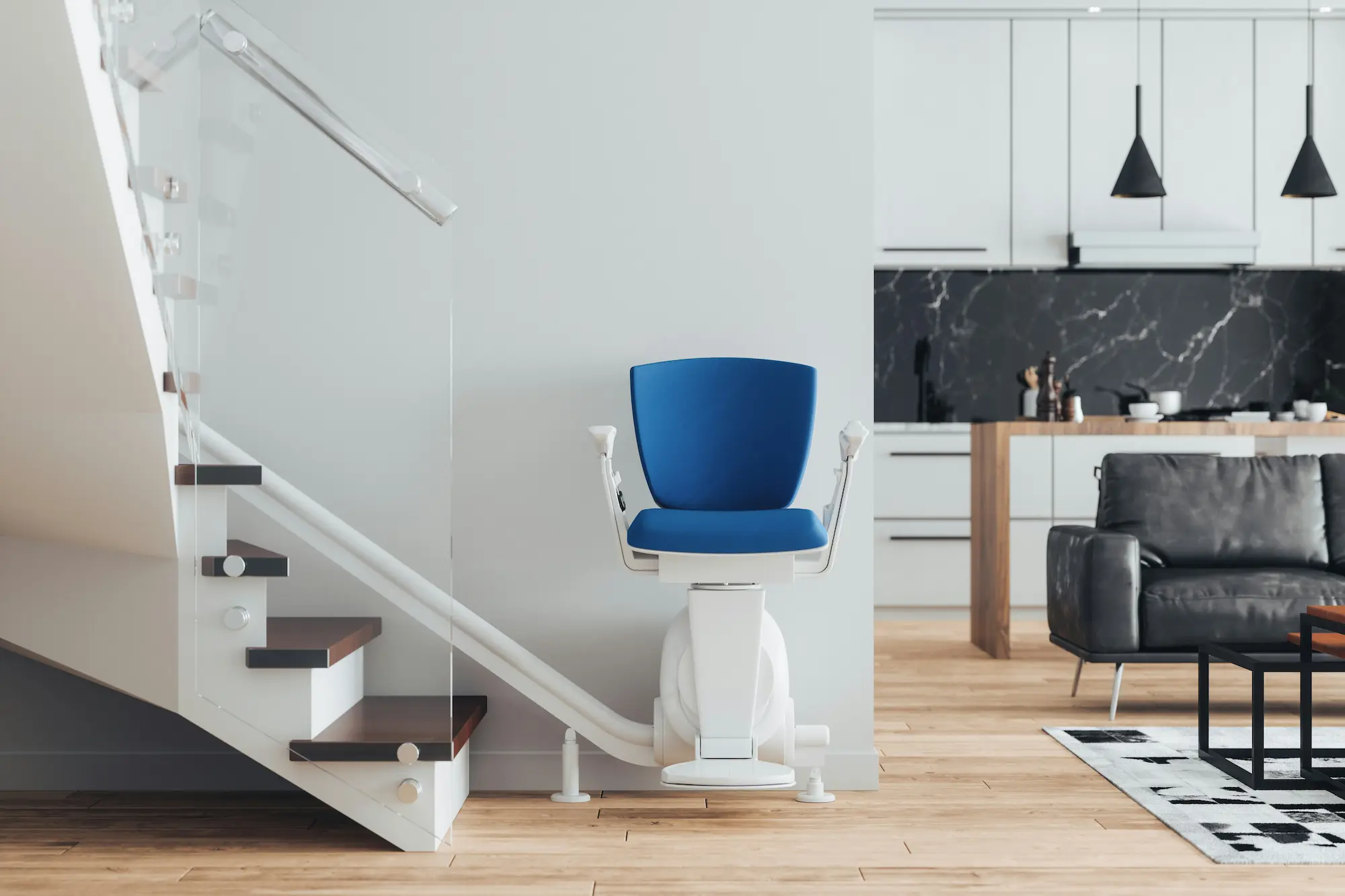
Stairlifts help individuals with limited mobility move safely between floors without having the climb the stairs.
A DFG can help cover the cost of installing a stairlift where it is necessary to meet the person’s needs and support access to essential areas of their home, reducing any need for the individual to move into single-storey accommodation or residential care. Stairlifts reduce the risk of falls and physical strain, meaning disabled tenants can remain independent and continue using their whole home.
Hoists and slings
Hoists and slings are used to help people with limited mobility transfer safely between surfaces, such as from a bed to a wheelchair or between a chair and the bathroom.
The DFG may contribute towards suitable lifting equipment where it forms part of the adaptations needed to make the home safe and accessible. This can reduce the physical effort required form both the individual and their carer, helping to minimise the risk of injury during transfers. The right equipment can also support personal dignity, comfort and greater independence with daily activities.
Through-floor lifts
Through-floor lifts travel vertically between floors through a purpose-built opening, allowing individuals who cannot manage stairs to access different levels of their home independently.
Where the lift is considered necessary to support an individual’s needs in their home, a DFG can help fund the lift and any structural work. This can be particularly valuable for people who use a wheelchair or have progressive mobility difficulties that make stairs increasingly challenging. Improving access to bedrooms, bathrooms and other essential living areas, through-floor lifts can help individuals live safely in familiar surroundings.
Platform lifts
Platform lifts offer a raised platform that carries a person, often with their wheelchair, between different floor levels or changes in height.
A DFG can contribute towards installing a suitable platform lift to overcome access barriers, such as steps at an entrance or changes in level within the property. The equipment makes it easier for wheelchair users and people with limited mobility to move around their home without relying on others to lift or physically assist them. A platform lift can improve accessibility, reduce the risk of falls and support greater independence.
Wider home adaptations
Wider home adaptations could include ramps, widened doorways, accessible bathrooms, grab rails and changes to kitchen facilities.
A DFG can support these improvements to make it easier for people with disabilities to enter and move around their homes, as well as wash, dress and carry out everyday tasks safely. Funding may also support larger projects, like creating a downstairs bedroom or bathroom to meet an individual’s needs. By adapting the home to suit the individual’s needs and changing requirements, a DFG can help someone maintain independence, dignity and quality of life.
At NHC Procurement, we work with a range of trusted suppliers who provide stairlifts and lifting equipment services for public sector organisations, including social housing associations and other local authority services.
Who is eligible for a Disabled Facilities Grant?
An individual can qualify for a Disabled Facilities Grant if their home needs essential adaptations to support their mobility or other needs. To be eligible for the DFG, the property must be the tenant’s main or only residence, and they must intend to live there for the five-year grant period.
Both adults and children can receive the grant. A means test is conducted for adults, with the test based on household income and savings, with the first £6,000 of savings ignored. For children and young people under 18, applications are not means tested.
There are three typical applicant categories for the DFG:
- Owner: homeowners can apply for the DFG through their local council by providing details of the disabled person’s needs and the required adaptations, before the council assess whether the work is appropriate and practical for the property.
- Tenant: a tenant living in private rented, council or housing association properties can apply through their local council for funding, and will generally need their landlord’s consent for the work, along with any relevant documentation.
- Landlord: applications for a DFG can be made by a landlord on behalf of a disabled tenant, with the landlord contacting the local council to discuss proposed work and application requirements.
It’s important to note that whilst owner and tenant applications are means tested, landlord applications are not, but the local authority will consider relevant factors when deciding how much to award, such as how much the landlord could increase the rent because of the adaptations.
The local authority plays a key role in approving a DFG. They must formally approve the work before it begins, and an occupational therapist must assess that the changes are necessary and appropriate for your resident.
How the application and approval process works
The application process for a Disabled Facilities Grant can be started by contacting your local council’s social services or housing department.
After the initial contact, an occupational therapist will conduct an assessment to evaluate the individual’s needs at home. They will decide what adaptations are necessary and appropriate for your tenant’s condition and what is reasonable and practicable for the property.
A formal application must be completed, which requires proof of ownership, tenancy and landlord permission, contractor quotes and national insurance numbers. For adults, the council will then check the household income and savings to see if an individual must contribute towards the costs of the adaptations.
By law, the local council must provide a formal written decision in response to your application within six months (180 target working days or less, depending on triage and urgency) of receiving a completed application. If the application is approved, you will receive a letter detailing the approved works and if any personal contribution is needed.
Delays are sometimes possible in the DFG application and approval process, with long waiting lists, administrative backlogs and complex property requirements often proving difficult.
How housing providers can source compliant suppliers once funding is approved
Once a Disabled Facilities Grant application has been approved, housing providers and local authorities must source compliant contractors whilst balancing strict public procurement rules with the legal right of the application to choose their preferred supplier. Providers must also ensure compliance with the Procurement Act 2023.
At NHC Procurement, we work with trusted suppliers across the UK who can provide home adaptations in line with the Equality Act 2010 to ensure individuals are able to live safely, comfortably and independently in their own home.
Our Stairlifts and Lifting Equipment framework has two lots which cover the design, supply and installation of lifting equipment, as well as the service and maintenance.
Contact us to discuss your requirements or complete our enquiry form to see how we can work together to make sourcing stairlifts and lifting equipment for social housing accessible for all.